
The Normalisation and Weaponisation of Starlink in Sudan (Photo Series)
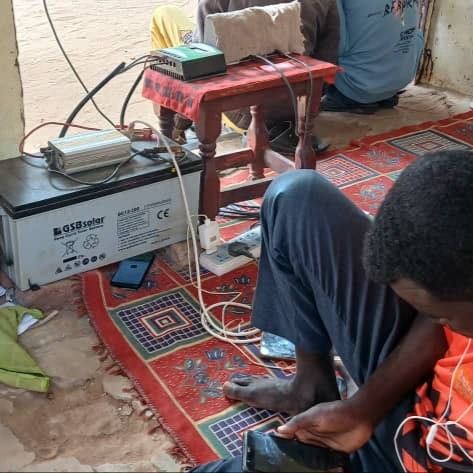
This photo series by Tamer Abd Elkreem and Susanne Jaspars illustrates how Starlink private internet provision has been normalised and weaponised during the war.
This working paper presents findings for the second, in-depth phase of the research in England. It focuses on the experience of marginalised populations as well as how digital food assistance practices interact with political and economic processes.
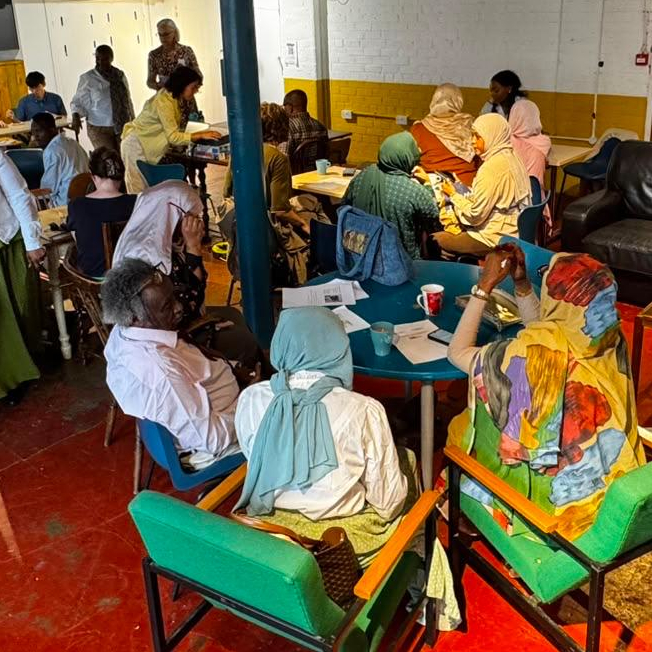
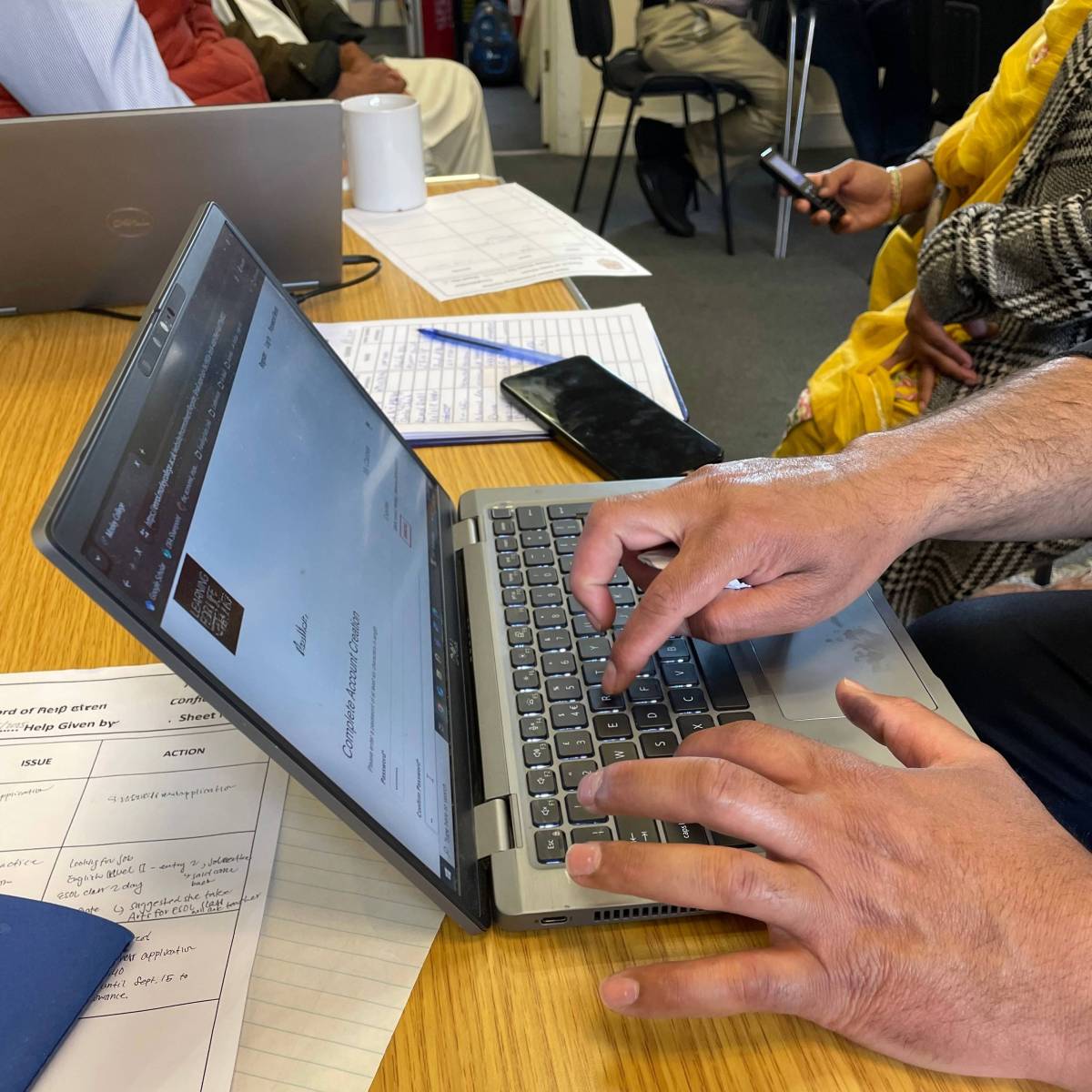
This photo series by Yasmin Houamed explores the everyday practices and improvised adaptations that arise as welfare and social support systems move increasingly online. In England, access to state welfare services - including [...]
This photo series explores the everyday practices and improvised adaptations that arise as welfare and social support systems move increasingly online.
On 19 November 2026, Tamer and Susanne presented preliminary findings of the second phase of Sudan research at CEDEJ Khartoum in Cairo.
Together with the International Humanitarian Studies Association (IHSA), the team has edited a blog series on ‘The politics of food and technology’ based on their IHSA conference panel.
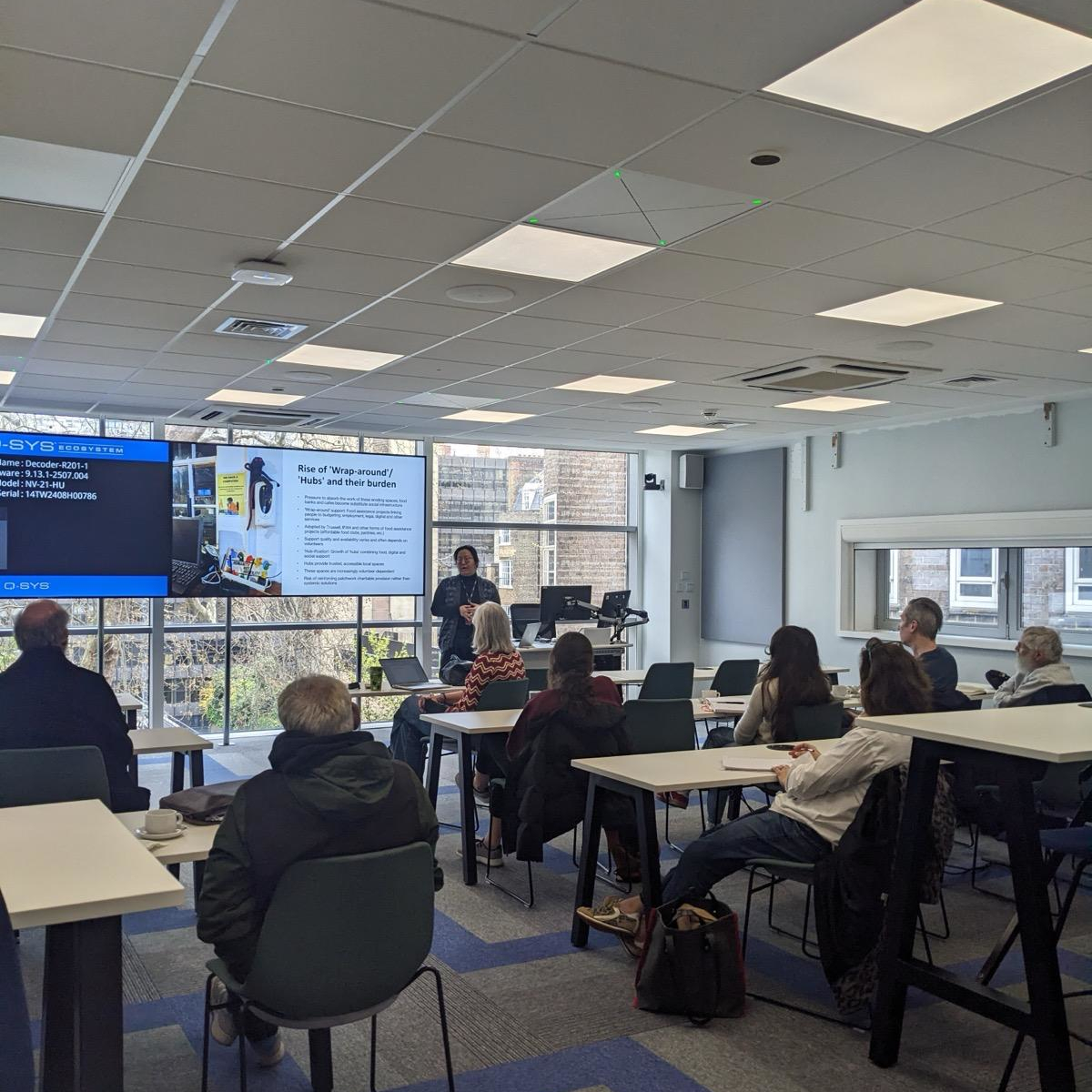
The team organised a panel on ‘The politics of food and technology in changing global and local crises’ at the conference of the International Humanitarian Studies Association in Istanbul (15-17 October).
Tamer and Susanne presented a paper at the IDS conference (from 15-17 September 2025) on ‘The Politics of Digitalising Food Assistance in Sudan’s Crisis, and its Effect on the Food Security of Marginalised Populations’.
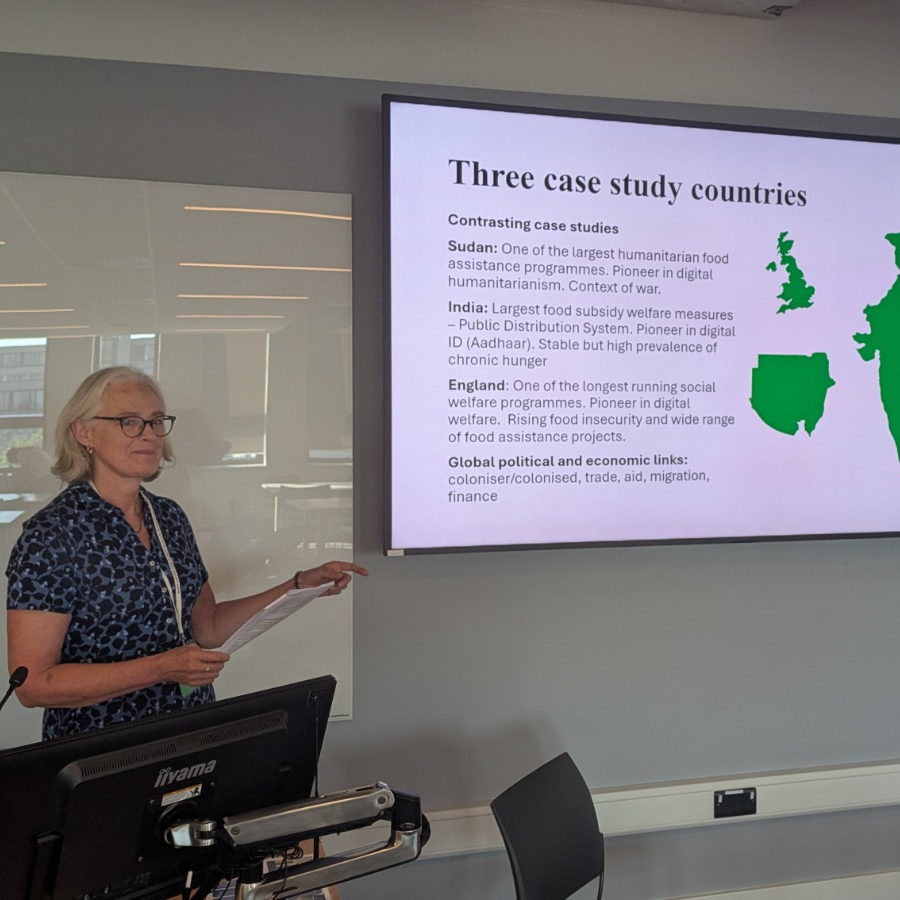
The international team met in Cairo (with Indian colleagues joining online) to discuss the preliminary analysis of our three country cases, start a comparative analysis, and plan our publications and dissemination strategy.
This article argues that the digitalisation of food assistance mimics aspects of colonialism, especially in terms of the asymmetries involved in the extraction of data (as a valuable resource) from vulnerable populations and the dominating role of US-based multinationals.