The Politics of Food and Digital Technologies in Changing Global and Local Crises

Authored by:

Categories: PublicationTags: , , , ,

Original article published by ISS Bliss Blog on November 6, 2025.

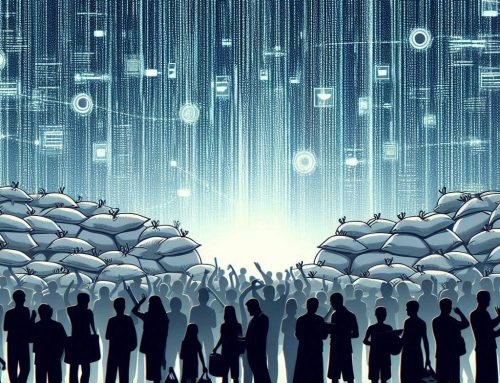
Digitalisation is transforming how food and humanitarian assistance are delivered across the Global South and the Global North – from Sudan and India to the UK. While promoted as efficient and accountable, these systems often reproduce exclusions and reinforce unequal power relations. In this introductory blog, Yasmin Houamed argues that digitalisation is not a neutral innovation but a political process, fraught with risks and vulnerabilities.

Over more than a decade, inequality, food crises and humanitarian emergencies have increased globally. Humanitarian crises are not confined to the Global South. This is closely linked to a changing geopolitics and the effect of decades of neoliberal ideologies. , the results of which are evident in widely varying contexts, for example, Sudan’s humanitarian crisis, India’s protracted hunger crisis, and the UK’s deepening food crisis. This trend is also associated with an increase in technocratic  approaches, including the digitalisation of food and humanitarian assistance. While promoted for reasons of efficiency and accountability, the use of digital technologies to provide assistance can lead to new forms of exclusion, or the formalisation of existing inequalities. Digital technologies involve powerful transnational and national companies, states, and organisations, each with their own specific political and economic motivations, interests, and effects.

This post, the first in a series on The Politics of Food and Digital Technology by BLISS in collaboration with the SOAS Food Studies Centre, introduces key themes that emerged from our recent panel with the same title at the International Humanitarian Studies Association conference, held in Bergen and Istanbul in October 2025. The following blogs in the series are based on each of the presentations in the panel, as well as comments from the discussants.

1. Digitalisation as Fiction

The push to digitalise critical services has become almost unquestioned in multiple contexts. In the UK, as panelist Iris Lim outlined, the Universal Credit welfare system has been digital-by-default since 2013. This digitalisation clashes with the reality of individuals excluded from accessing support due to their limited access to devices or internet, difficulties navigating bureaucratic processes, or (lower) digital literacy.

Governments and donors describe digital tools as neutral and objective, yet their use often masks political choices. As discussant Pierrick Devidal observed, humanitarian actors risk falling for “the fiction” of digitalisation – forgetting its long history and that key foundational elements of humanitarianism do not align with it.

Panelist Hayley Umayam’s research in South Sudan (2017–2020) shows how biometric registration as part of “needs-based” targeting shifts accountability away from people and onto digital systems by “translating uncertainty into procedural legitimacy,” giving the illusion of fairness even when large groups are excluded.

The attraction of innovation can distract from these realities. Technologies promise efficiency, but for whom? For recipients, digitalisation can mean new barriers, surveillance, and loss of agency. For service providers, it can mean extra work and less flexibility. To move beyond fiction, digitalisation must be grounded in lived realities and complement, not replace, human judgment.

2. Digitalisation as an Incomplete Image

Digitalisation promises visibility, yet it also produces blindness. As panelist Jeremy Taylor argues, the humanitarian sector’s increasing reliance on digital data creates a paradox of visibility: those most in need are often least visible to digital systems. He uses the example of the 2022 siege of Tigray, where data collection was nearly impossible or was manipulated by Ethiopian authorities. The question we must return to, Taylor asks, is “What levels of uncertainty are we willing to accept in order to save lives?” Digitalisation, in this sense, creates an incomplete picture of need – one that privileges measurable (if imperfect) data over on-the-ground knowledge.

Similarly, as panelist C.Sathyamala outlines, the digitalisation of India’s Public Distribution System (PDS) fails to provide for the most marginalised. For example, fingerprint authentication excludes manual labourers whose worn prints make them “illegible” to the state. In both cases, uncertainty by digital measures excludes the most vulnerable.

3. Digital systems as a Double-Edged Political Tool

Digital systems can function as tools of control, and they can also create new forms of exclusion.. Several of our panel papers examined how digitalisation reshapes power within and beyond state borders.

Panelist Eiman Mohamed’s paper on “digital sovereignty” highlighted another dynamic in Sudan: government-imposed internet shutdowns used to control communication and dissent. Rather than liberating states or citizens, digitalisation can reinforce dependency on global technology and finance companies – a form of “digital colonialism.”

India’s biometric ID cards are another example. C. Sathyamala describes how what started as a surveillance project for citizenship evolved into an asset making system where data collection becomes an important resource leading to capital accumulation. It is apparent from the cases presented that data is not neutral. It serves political, economic, and strategic interests as much as humanitarian ones.

4. Rethinking Responsibility: From Digital to Dignity

Similar questions of ethics, agency, and responsibility surfaced across all the papers. As discussant Usha Ramanathan observed, the fact that the same problems recur across regions is both “fascinating and depressing” – but recognising this commonality creates space for collective solutions. Increasingly, when technology fails them, the burden falls on individuals to navigate complex systems and challenge opaque, unaccountable bureaucracies. As Umayam puts it, the “moral burden is displaced onto digital processes.”

This shift dehumanises recipients of aid as they are treated automatically as potential fraudsters, having to continually verify their identity and ‘neediness’. Devidal argues for “building back” capacities that have been outsourced to digital systems: local discretion, trust, and accountability could all play into a wider conversation about ‘digital resilience’.

Across all cases, digitalisation reorders power – between citizens and states, between public and private actors, and between visible and invisible marginalised groups.

Conclusion

Digitalisation introduces new risks: surveillance, corporate capture and exclusion. Policymakers and humanitarian actors must ask not only what technology delivers but what it sidelines – local knowledge, trust, and human judgment.

Digitalisation is a political choice, not an inevitability. Systems must be designed to serve people rather than power, recognising that data is never the whole story – and that its use carries real risks for individuals and states alike.


Acknowledgement: Many thanks to my colleagues Susanne Jaspars, C. Sathyamala, Tamer Abd Elkreem, and Iris Lim for discussions, review, and comments on an earlier version of this blog. We work together on the ESRC-funded research project examining the effects of digitalising food assistance.


BLISS will be publishing various blogs from this series over the next few months. For more information about the project ‘Digitalising Food Assistance: Political economy, governance and food security effects across the Global North-South divide’, check out the project website, or overview on the website of SOAS, University of London.

Share This Post