Digital Food Assistance in India. Marginalising the marginalized
Authored by: C. Sathyamala and Susanne Jaspars
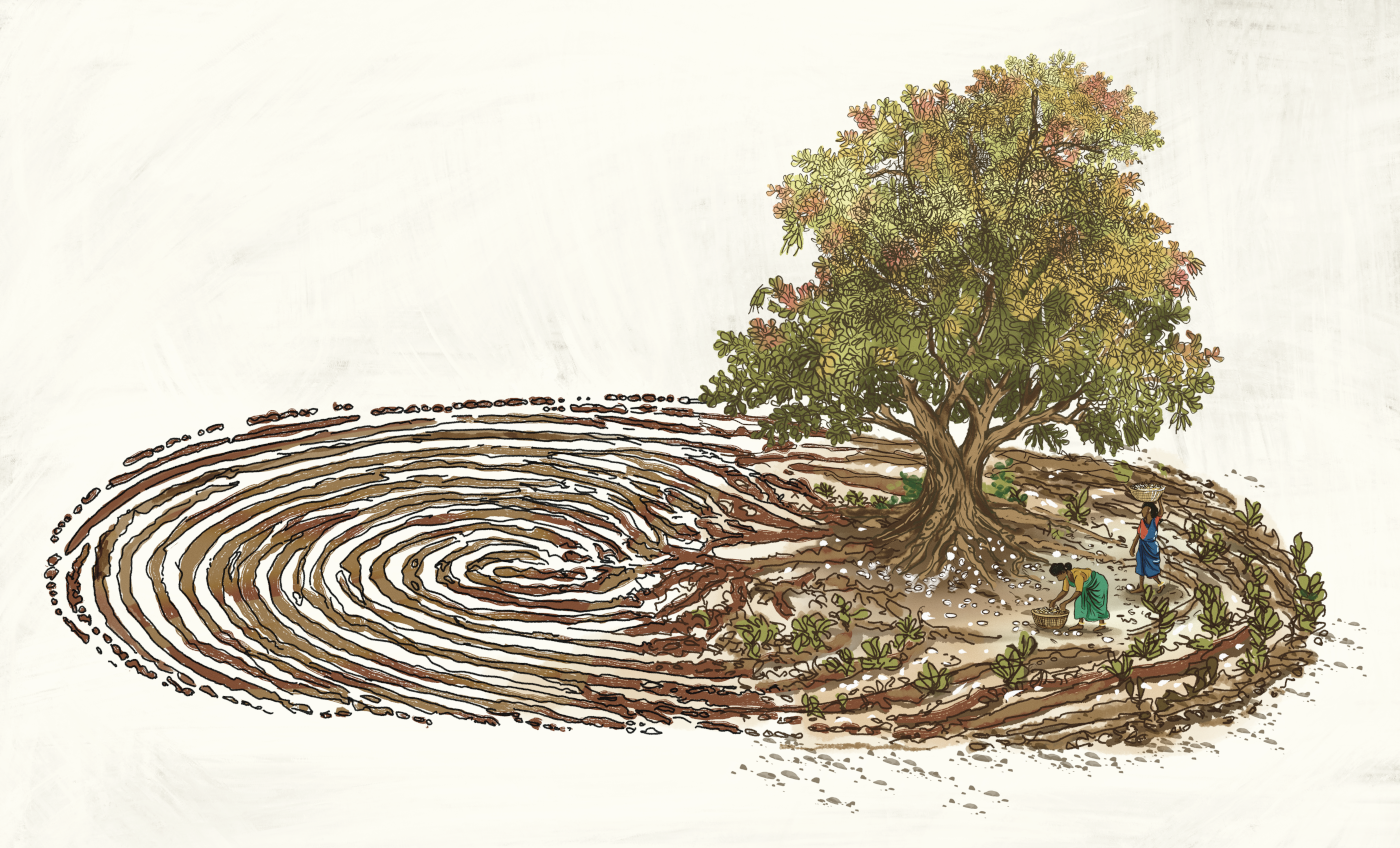 In this second working paper, based on data from Phase II of the research on the digitalisation of food assistance, we continue to examine how digital food assistance practices interact with political and economic processes. In this phase we have focused on three main areas: the digitalisation of the Public Distribution System (PDS) from ‘farm to stomach’, i.e, from procurement to distribution; smart and precision agriculture; and the JAM (Jan Dhan, Aadhaar, and Mobile) trinity, which is the scaffolding said to hold up digital India. Fieldwork was conducted in two states, Delhi and Chhattisgarh which were chosen to reflect the two ends of the spectrum in terms of development, particularly infrastructure, including digitalisation. Data was collected from two field sites (rural and urban) in Delhi and four field sites (three rural and one urban) in Chhattisgarh. Empirical data was also collected on the Saagu Baagu project in Telangana which is held up to be a success story of enabling small and marginalised cultivators to benefit from smart technologies. The conclusion is that, contrary to what the government has averred – that digitalisation is a success story in every way – the evidence gathered in this study points to a different narrative when viewed from the perspective of the poor and the marginalised. What comes out clearly is that they have been forcibly co-opted into a system which is of little benefit to them. Digital India has resulted in further marginalising the poor who have little to gain but much to lose in this misadventure, which is not of their making.